
What is number sense? How to Build It Before going to school?
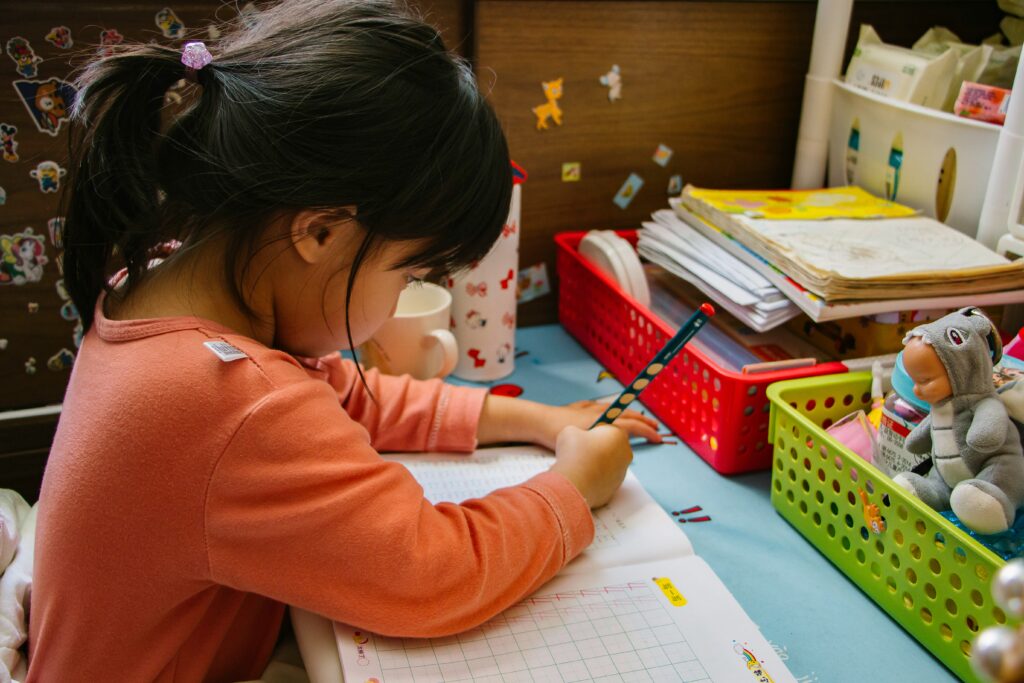
So, what does it mean to have numerical sense? The capacity to understand numbers and how they relate to each other is called number sense. It is the basis of all arithmetic skills. Students who have a great sense of numbers go beyond just memorising facts and learn how to use arithmetic concepts.
Parts of number sense
Several parts make up number sense. They are:
- Counting and cardinality: Knowing how to count; being able to count from any number to any number, both forward and backwards; and being able to give things worth. Knowing the real count or number of objects in a collection is what mastering cardinality means.
Number relationships: Knowing how to find and understand number patterns, place value, and number “families.” For instance, a child who knows a lot about how numbers work will know that 3-2=1 if 1+2=3.
Quantity and magnitude: Knowing “how many” of something and being able to find, compare, and guess different amounts.
Estimation and approximation: Knowing how to get a “close enough” response and being able to round answers to certain place values.
Operations and computation: using mental math to solve problems; knowing what operations (addition, subtraction, multiplication, and division) mean and how they are related to each other.
Understanding and using numbers in the actual world: being able to use numbers to figure out the right amount of change, measure distance, analyse data, or tell time.
What makes number sense important?
Number sense is a very important part of learning arithmetic in the future. People who know how to use numbers can better manage their money, such as making a budget and figuring out how much interest they will pay on loans.
Having a strong number sense makes it easier to understand and feel good about dealing with numbers. People with number sense can make smart choices when they compare costs at the grocery store or figure out how much money they can save when shopping.
You can teach number sense like this.
Real-Life Experience
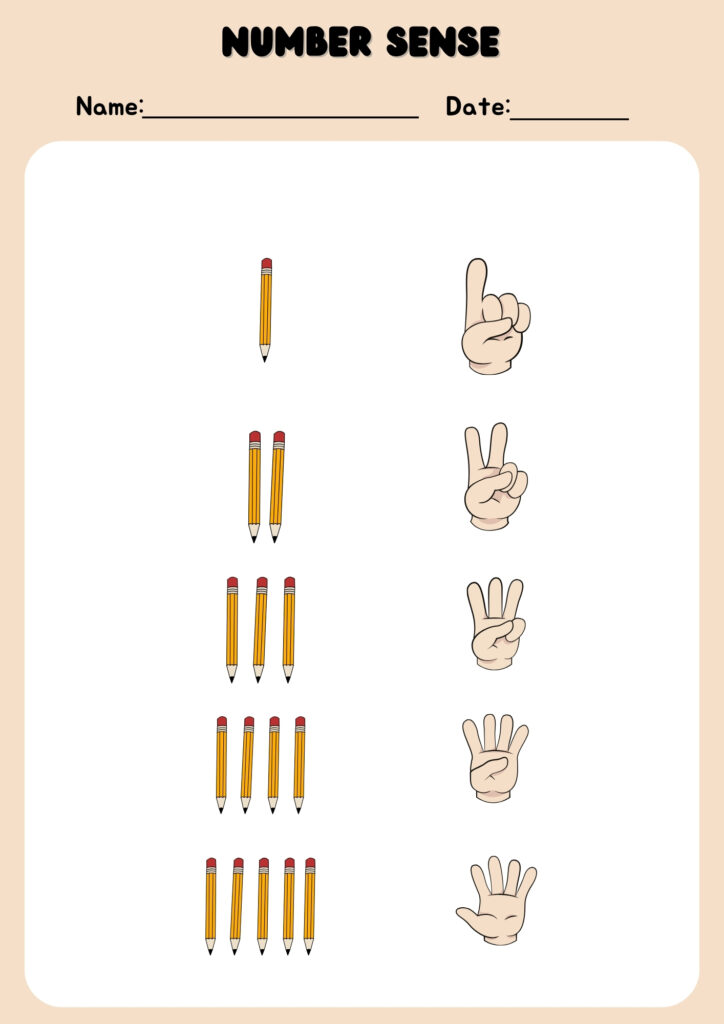
Kids learn best when they use real things. They also use their fingers to play games and activities that involve getting their hands dirty, and having fun is the best way to learn. Kids stay interested and concentrated, and kids learn better this way than by just writing on the board and explaining things.
clear Teaching
is important to teach each skill in a clear order. One big mistake we might make is thinking that a kid understands something from years ago. Explicit instruction is the optimum time to help students link ideas and concepts. There are several ways to do it, such as teaching and modelling to the full class, leading groups, working in small groups, or having one-on-one conversations.
Focusing on the base
When teaching anything, the base or foundation is very crucial. Give it some time. Make sure the pupils understand each notion before going on. From the very beginning, children should have a good grasp of place value and how the number system works. This will benefit them as they learn more math.
In a nutshell
To figure out things like how much money you spend each month or how fast the population is growing, you need to have a good sense of numbers.
If you don’t have a good number sense, you have to rely on rigid procedures and inefficient ways to do math. Weak number awareness can make it hard to figure out sale pricing or discounts correctly.
Number sense helps people learn how to think critically and logically, which are useful skills in school and in everyday life.